Blog

Script Breakdown in Indian Cinema From Highlighters to Digital Intelligence

In the high-stakes ecosystem of Indian cinema—where a single production can pivot from a sprawling musical sequence in a Mumbai studio to a rain-drenched realistic drama on the streets of Kochi—pre-production isn’t merely a phase; it is the fundamental infrastructure of the film. As the industry matures into a global powerhouse, the traditional "diary-and-highlighter" method of planning is being replaced by a more precise, data-driven methodology.

At the epicenter of this evolution is the script breakdown. Whether you are an Assistant Director (AD) navigating the corridors of a major production house like Yash Raj Films or an independent producer in the burgeoning Malayalam film industry, mastering the art of the breakdown is no longer a luxury—it is the prerequisite for professional survival.

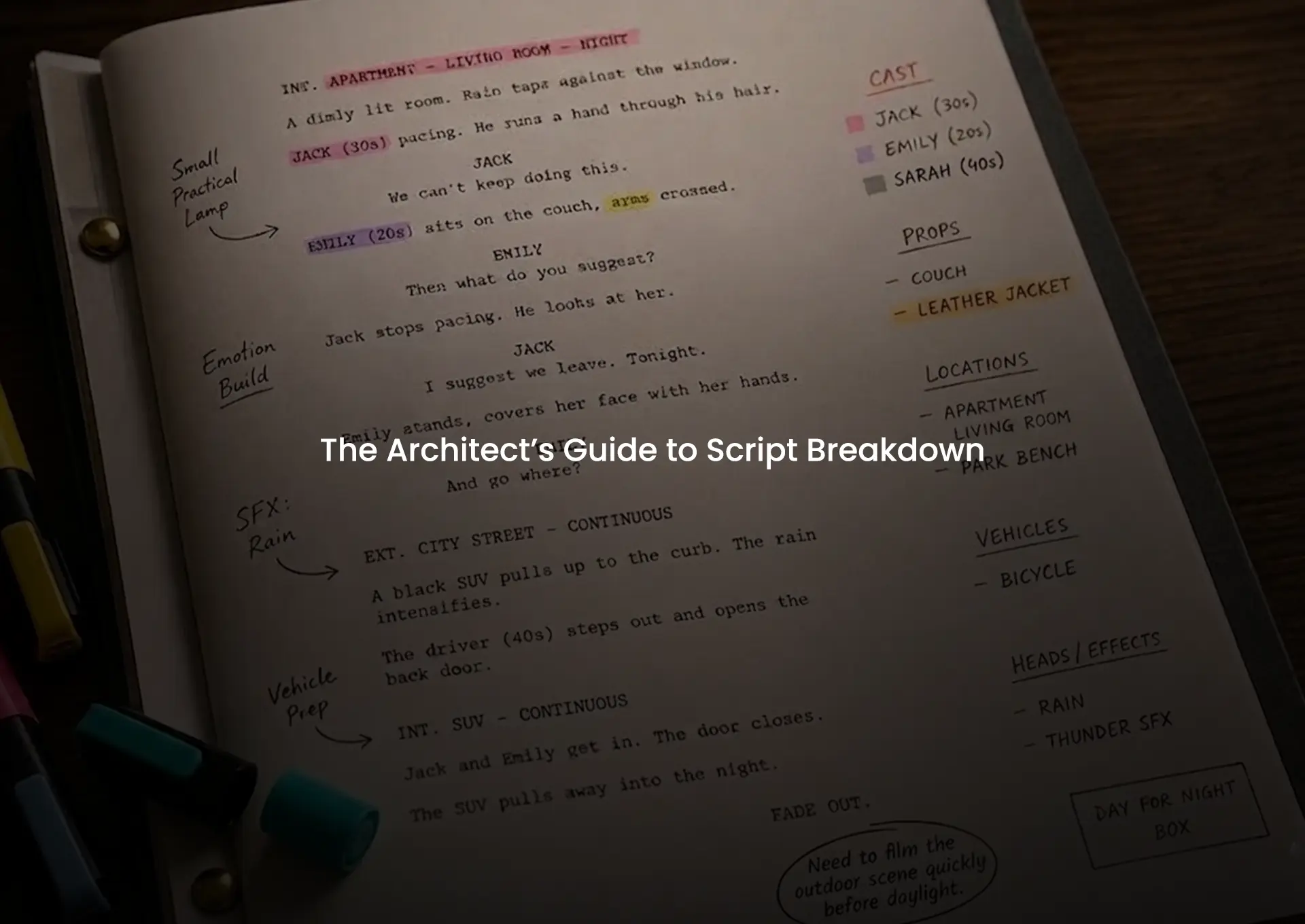
Annotated film script breakdown page showing highlighted screenplay elements, cast, props, locations, and production notes for Bollywood and regional cinema planning.

1. Defining the Modern Script Breakdown

In its simplest form, a script breakdown is the systematic process of analyzing a screenplay to identify every physical resource required to bring it to life. However, in the context of Bollywood and Regional Cinema, this process is significantly more complex than the standard Hollywood model.

In India, a script breakdown must function as a bridge between creative vision and logistical reality. It isn’t just about noting down characters and locations; it’s about anticipating the unique variables of the Indian set: the logistical requirements of a 200-person dance troupe, the specific lighting needs for a traditional wedding sequence, and the linguistic nuances of a bilingual production.

Using professional script breakdown software allows the production team to transform a static PDF into a dynamic database, where every "element"—from a vintage Vespa to a specific shade of lipstick—is cataloged, budgeted, and scheduled with surgical precision.
2. The Shift to Digital: Why Software is Non-Negotiable in 2026

For decades, the 1st Assistant Director’s desk was defined by a stack of scripts bleeding with multi-colored ink. While there is a romanticism to the manual breakdown, the scale of modern Indian cinema makes it unsustainable.

Precision and Version Control

A Bollywood script is rarely "locked." Changes happen during rehearsals, on-set, and even during the transition between regional dubbing sessions. Manual breakdowns fall apart the moment Page 42 is rewritten. Modern script breakdown software offers instant version control. When a scene is added or deleted, the software automatically re-numbers the production, updates the cast list, and alerts the relevant departments.

Collaborative Ecosystems

Cinema is a collective effort. A script breakdown isn't just for the AD; it's the "Source of Truth" for:

  • The Art Director: To know which props need to be sourced or built.
  • The Costume Designer: To track "Days of Continuity" for every character.
  • The Line Producer: To calculate the "Burn Rate" of the daily budget based on scene complexity.

3. The Anatomy of an Indian Script Breakdown Sheet

To perform a professional breakdown, one must understand how to categorize "Elements." In the Indian context, these elements are often more granular than in international productions.

A. The Slugline (Scene Heading)

The software automatically parses the script into scenes based on the slugline. In regional cinema, this is critical for "Recce" (location scouting). If a script has 15 scenes tagged as "EXT. BACKWATERS - DAY," the software allows the production manager to group these into a single "Block" for the shooting schedule, minimizing travel time and equipment transport costs.

B. Cast and Atmosphere

In Bollywood, cast management is a juggling act of "Star Dates." Software allows the AD to see exactly how many days a lead actor is required versus the "Atmosphere" (extras).

  • Featured Parts: Characters with dialogue.
  • Background (General): The crowd in a market.
  • Background (Special): Specifically dressed extras (e.g., traditional Kathakali performers in a Malayalam film).

C. The "Song & Dance" Element

This is the most significant differentiator in Indian cinema. A Hollywood script might describe a song in two lines. In a Bollywood breakdown, this "element" is expanded to include choreography teams, rehearsal spaces, playback audio equipment, and sync-sound versus post-dubbing requirements.

4. The Step-by-Step Breakdown Workflow

To ensure no detail is missed, follow this industry-standard workflow used by top-tier production houses.

Step 1: The Creative Immersion

Before touching any script breakdown software, read the script for narrative and emotional flow. An AD needs to understand the tone. A "rain scene" in a romantic Bollywood drama requires different resources (soft lighting, rain machines) than a rain scene in a gritty regional thriller (natural light, mud, waterproof camera rigs).

Step 2: The Technical Import

Import your screenplay (usually in .fdx or .pdf format). The software will automatically generate a scene list. This is where you begin the "Technical Pass."

Step 3: Elemental Tagging

Go through the script line by line. Every noun that requires a budget or a person is tagged.

Script line: "Rahul hands the antique key to the inspector."

Tags: Rahul (Cast), Antique Key (Prop), Inspector (Cast).

Step 4: Measuring in 8ths

The film industry measures scene length in "8ths of a page." A 1-page scene is 8/8ths. A half-page is 4/8ths. This is the most vital metric for the Line Producer. If your software shows you have 10 pages (80/8ths) to shoot in a single day at a busy Mumbai junction, you know immediately that the schedule is impossible.

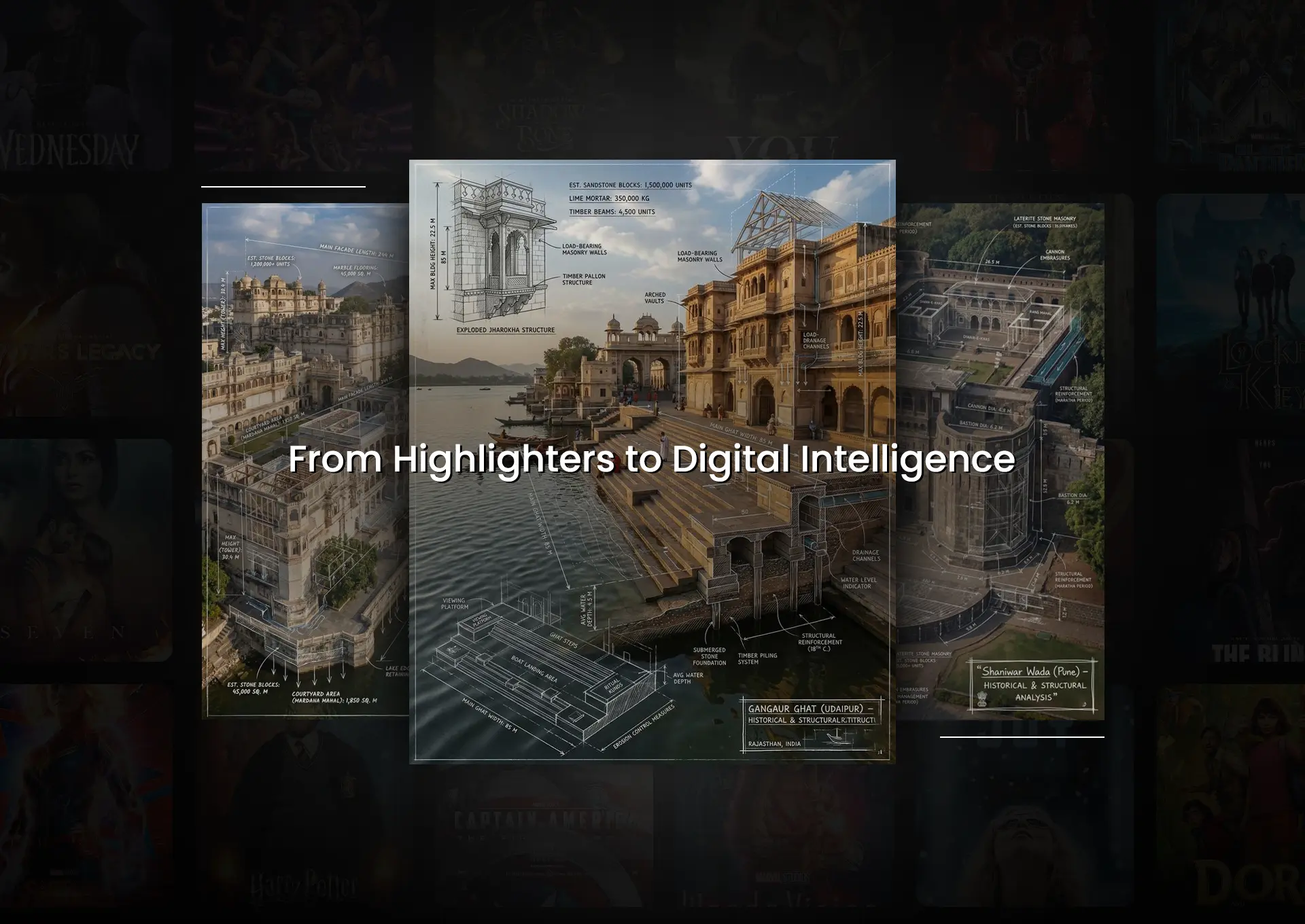
Architectural-style visual representing the evolution of film script breakdowns from manual highlighting to AI-powered digital intelligence in Bollywood and regional cinema production.

5. Regional Focus: The Logistics of Malayalam and Tamil Cinema

Regional cinema, particularly in Kerala and Tamil Nadu, often operates on tighter schedules and more realistic locations than big-budget Bollywood "Sets."

The "Location Continuity" Challenge

In Malayalam cinema, realism is king. A film might be shot entirely in a remote village in Idukki. The breakdown must account for:

  • Unit Housing: Where do 60 people sleep when the nearest hotel is 40km away?
  • Travel Tags: Every scene at a remote location must be tagged with "Travel Time" elements to ensure the crew doesn't exceed legal working hours.

Language and Multi-Language Projects

The "Pan-Indian" film (released in 5+ languages) requires a "Multi-Script Breakdown." The AD must track if a scene has "Dialog-heavy" versions for different languages, which significantly increases the "Page Count" and "Shooting Time" for that specific day.

6. The Limitation of Global

Many filmmakers in India initially turn to high-end international software. While powerful, these platforms often present significant drawbacks for the Indian production environment:

  1. Cost Prohibitivity: Subscription models in Dollars can be a massive drain for independent regional films.
  2. Lack of Regional Context: Most software is built for the Hollywood union structure, ignoring the specific departmental workflows of the Indian film federations.
  3. Language Friction: Managing scripts in Hindi, Malayalam, or Tamil often results in formatting glitches or "breaking" the tagging logic.
  4. Connectivity Issues: International cloud-based tools often struggle on remote location shoots where Indian 5G/4G signals are intermittent.

7. Introducing Visual Take: Engineered for Indian Cinema

After analyzing the gaps left by international players, a new standard has emerged: Visual Take.

Visual Take is a Film Production Management software built specifically to handle the regional complexities of the Indian film industry. It isn't just a digitized version of a Western tool; it is a ground-up solution designed for the realities of Bollywood, Kollywood, Mollywood, and beyond.

Why Visual Take is Different:

  • Regional Nuance: It understands the "Song Sequence" as a complex logistical unit rather than a simple scene.
  • Bilingual Capability: Designed to handle scripts in various Indian languages without losing formatting or searchability.
  • Offline Resilience: Recognizing that the best stories are often told in the most remote corners of India, Visual Take ensures your breakdown is accessible even when the network isn't.
  • Departmental Synergy: It aligns with the specific hierarchy of Indian film crews, allowing for seamless communication between the AD, Line Producer, and HODs.

8. Professional Best Practices

To be a "Senior Architect" of a production, one must look beyond the screen. Here are three expert tips for a flawless breakdown:

  • The "Buffer" Element: Always tag a "Buffer" for complex scenes. If you are shooting in Goa during the monsoon, tag a "Weather Contingency." This alerts the producer to have an indoor "Cover Set" ready.
  • The Departmental Walk-Through: Once the breakdown is done, do a "Script Walk" with the HODs. The Cinematographer might see a scene tagged as "Simple Interior" and point out that it actually requires a massive lighting crane outside the window.
  • Trust the Metadata: Ensure every element has metadata. Don't just tag "Car." Tag "Red 1960s Ambassador (Non-Running)." This prevents the transport department from bringing the wrong vehicle to a remote set.

9. Conclusion: The ROI of a Meticulous Breakdown

In an era where "Content is King," Efficiency is the Kingdom. A script breakdown for Bollywood or regional cinema is not a bureaucratic hurdle; it is the most powerful tool for protecting the creative vision. By using a professional script breakdown software—and specifically one built for our unique industry like Visual Take—filmmakers can turn "Chaos" into "Calculated Creativity."

When the breakdown is handled with precision, the Director can focus on the performance, the Cinematographer can focus on the light, and the Producer can sleep at night knowing that every rupee spent is visible on the screen.

FAQ: Frequently Asked Questions

What is the best software for a low-budget Malayalam film?

While many options exist, Visual Take is rapidly becoming the preferred choice for regional cinema due to its understanding of local production logistics and its cost-effective approach for Indian filmmakers.

Can I use Excel for a script breakdown?

While possible, it is not recommended. Excel lacks "Entity Relationship"—it doesn't understand that if you change a character name on page 1, it needs to change everywhere else. Dedicated software prevents these human errors.

How does a breakdown affect the film's budget?

The breakdown provides the "Line Items" for the budget. Without a breakdown, a budget is just a guess. With a breakdown, the budget is a mathematical certainty based on the requirements of the script.

Do Assistant Directors need specialized training for this?

While the software is intuitive, understanding the "Logistics of Film" (e.g., how long it takes to move a 100-person crew) is a skill learned on set. The software is a tool; the AD’s experience is the engine.


All in one film production suite background
Movytech Innovations

All in one film production suite

Powered by movytech